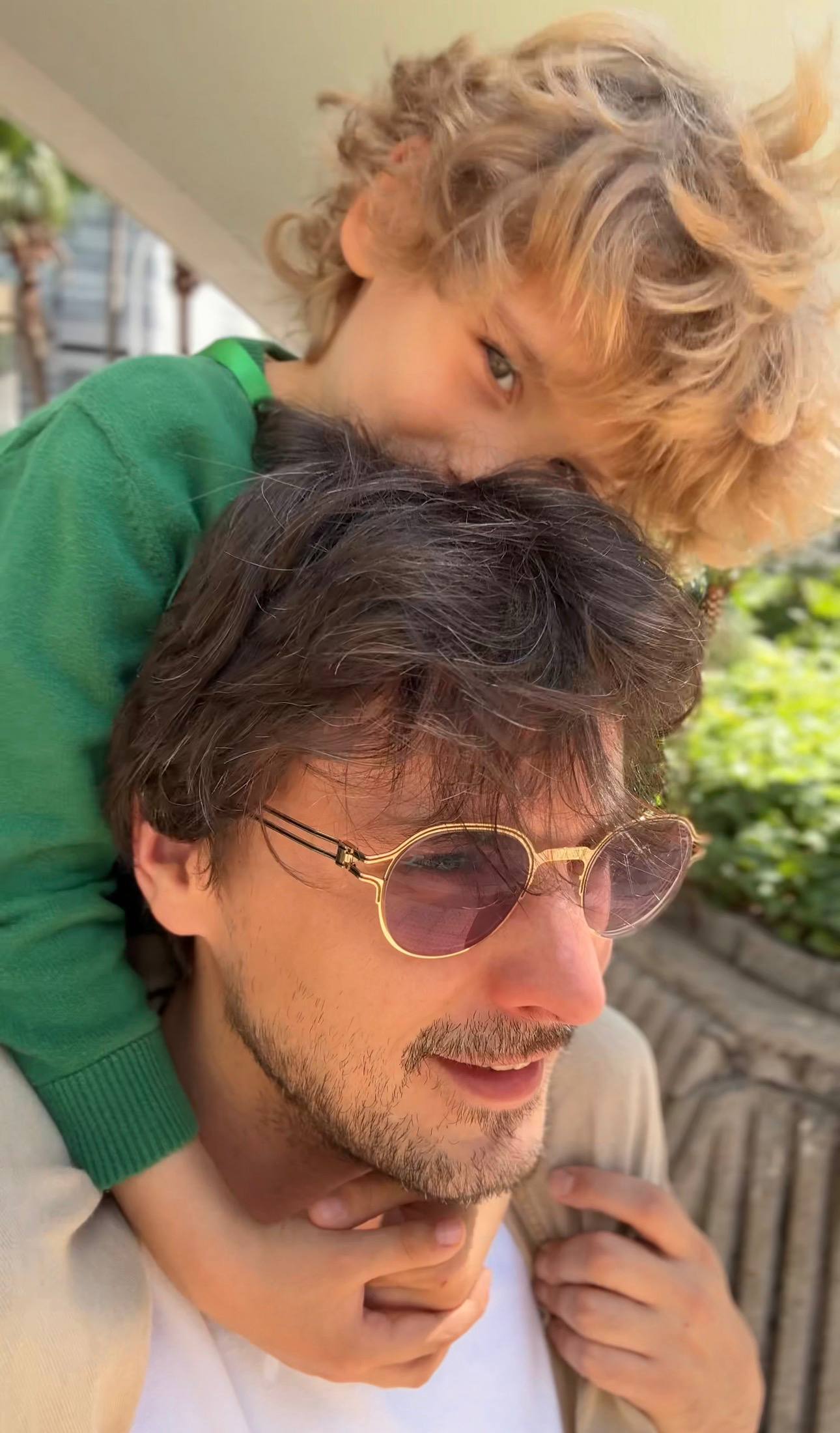
I asked AI what that means. Came up with a variant pathogenicity analysis and a new hypothesis.
Michael is 4. He doesn't hear well. Two broken copies of the STRC gene. One confirmed pathogenic. The other: "Variant of Uncertain Significance." Three words that block him from gene therapy trials.
I'm not a geneticist. I build websites, shoot video, and do AI education. I have an AI agent (OpenClaw, powered by Claude Opus 4.6) running on my laptop. It searches databases, downloads protein structures, runs analysis. I ask questions from my phone while Michael plays next to me.
One question led to reclassification evidence. Then conservation analysis. Then a hypothesis about fitting the gene into a single therapy vector. Then six structural experiments. Then three emails to the scientists who pioneered this research. One responded overnight. By day three, we had a new hypothesis: a self-dosing gene therapy where sound itself activates the treatment, backed by an ODE model showing therapeutic protein levels in 13 hours.
Science shouldn't be locked behind jargon. There's a podcast and a video below (both AI-generated) for anyone who'd rather listen than scroll through protein structures.
Egor and Michael, Hong Kong
Computational evidence supporting VUS to Likely Pathogenic reclassification for NM_153700.2:c.4976A>C p.(Glu1659Ala)
Every possible amino acid substitution at position 1659 is predicted Likely Pathogenic. This position is structurally invariant: any change breaks the protein.
E1659 is 100% conserved across all tested mammals, spanning ~80 million years of evolution. The surrounding motif PEIFTEIGTIAAG is identical in every species.
| Species | Position | Residue | Context |
|---|---|---|---|
| Human | 1659 | E | PEIFTEIGTIAAG |
| Mouse | 1693 | E | PEIFTEIGTIAAG |
| Rat | 1693 | E | PEIFTEIGTIAAG |
| Cow | 1647 | E | PEIFTEIGTIAAG |
| Green monkey | 1659 | E | PEIFTEIGTIAAG |
| Pig | 1650 | E | PEIFTEIGTIAAG |
| Dog | 1649 | E | PEIFTEIGTIAAG |
| Bat | 1646 | E | PEIFTEIGTIAAG |
| Bear | 1643 | E | PEIFTEIGTIAAG |
9/9 species conserve Glutamic acid (E) at this position. The surrounding 13-residue motif is identical across all tested mammals. This level of conservation strongly suggests functional importance and supports pathogenicity of any substitution (PP1 Supporting evidence per ACMG). Data source: UniProt ortholog sequences, motif-based alignment.
Stereocilin (Q7RTU9, 1775 aa) from AlphaFold v6. Position E1659 highlighted in magenta. Drag to rotate, scroll to zoom.
Color: pLDDT confidence (blue=high, red=low)
Glutamic acid side chain shown as sticks
STRC has a nearly identical pseudogene (STRCP1) located adjacent on chromosome 15q15.3. This causes most standard computational tools to fail or return unreliable results for STRC variants:
AlphaMissense is uniquely valuable for STRC because it predicts pathogenicity from protein structure, bypassing the sequence-alignment step where pseudogene STRCP1 causes other tools to fail. REVEL (0.65) also provides a concordant prediction, using an ensemble approach that partially mitigates this issue.
| Criterion | Strength | Evidence |
|---|---|---|
| PM3 | Moderate | Detected in trans with pathogenic whole-gene deletion (confirmed paternal) |
| PP3_Moderate | Moderate | AlphaMissense 0.9016 + REVEL 0.65 concordant (Pejaver 2022 threshold) |
| PM2_Supporting | Supporting | Absent from gnomAD (0 alleles in 251,000+ individuals) |
| PP1_Supporting | Supporting | E1659 100% conserved across 9 mammalian species (~80M years). Identical motif PEIFTEIGTIAAG. |
2 Moderate + 2 Supporting = Likely Pathogenic per ACMG/AMP 2015 combining rules
Computational hypotheses for accelerating STRC gene therapy. These require experimental validation.
Current STRC gene therapy requires two AAV vectors because the gene (5325 bp) exceeds the single-AAV packaging limit (~4400 bp usable). AlphaFold structural analysis suggests a single-vector approach may be possible.
AlphaFold predicts stereocilin's structure with varying confidence along the protein. The N-terminal region (residues 1-615) has very low confidence (pLDDT < 50), indicating it is likely intrinsically disordered with no stable 3D structure. The functional core starts around residue 616.
All regions have pLDDT < 50 (no stable structure predicted)
3984 bp fits in single AAV (<4400 bp limit)
This approach has proven precedent. The dystrophin gene (11,000 bp) was too large for any AAV. Researchers created "micro-dystrophin" by removing non-essential spectrin-like repeats, fitting it into a single AAV. This is now in Phase 3 clinical trials (Sarepta SRP-9001). The same principle: identify the structural core, remove disordered/redundant regions, preserve function. Nobody has tried this for STRC yet.
Important: This is a computational hypothesis based on AlphaFold structural predictions. It requires experimental validation: does mini-stereocilin fold correctly? Does it localize to stereocilia tips? Does it form horizontal top connectors and tectorial membrane attachments? These questions need wet-lab work. But the structural data strongly suggests the N-terminal region is dispensable, and a single-AAV mini-STRC approach deserves investigation.
Systematic computational testing of the mini-STRC hypothesis and variant impact. 3D models rendered live from AlphaFold 3 CIF files. Drag to rotate, scroll to zoom.
Low confidence interaction. Best cross-chain PAE: 8.6 A at N-terminal.
N-terminal removal barely affects binding (0.43 vs 0.47). Confirms dispensable.
No structural damage. The fold is intact. E1659A affects function (charge loss), not structure.
Full protein. N-terminal drags score down (16% disordered).
Truncated protein folds excellently. 7% disordered. Key result.
Confirmed disordered. 38% unstructured. Safe to remove.
Positive control: validates the calcineurin-NFAT cascade. CnA-CnB ipTM 0.91 (known complex). NFAT-CnA ipTM 0.72 (substrate recognition). NFAT disorder-to-order transition confirmed.
Mini-STRC (without N-terminal) achieves pTM 0.81, significantly better than full-length wildtype (pTM 0.63). The removed N-terminal region scores only pTM 0.27 with 38% disorder. Removing the disordered N-terminal produces a better-folding protein that fits in a single AAV vector.
Instead of replacing the entire STRC gene (5325 bp), what if we could correct just the single mutated base? There are three types of gene editing tools. I checked each one against Michael's specific variant.
Prime editing requires a "landing pad" (PAM site, NGG sequence) near the target. I downloaded the genomic sequence from Ensembl REST API and searched for NGG motifs within 15 bp of the variant.
Reality check: Prime editing has not been tested in inner ear hair cells in vivo. Delivering the prime editor + guide RNA to outer hair cells deep in the cochlea is an unsolved challenge. But this analysis confirms that Michael's specific variant is technically targetable. If delivery is solved (an active area of research), this mutation can be corrected at the DNA level.
Treating hearing loss with sound. There's a phrase in Russian: klin klinom, driving a wedge out with a wedge. The problem itself becomes the cure. I'm not a scientist. But I believe there's a certain elegance in solutions that use the nature of the problem to fix it. That belief led me to this hypothesis. When I shared our computational work with one of the world's leading STRC researchers, he called it the right direction and asked me to share the analysis with his team.
The idea: every gene therapy vector needs a promoter, a switch that controls when the cell makes the protein. Standard approach is always-on. Our hypothesis: put the gene behind a switch that responds to sound. Hair cells already have this machinery. Sound bends stereocilia, calcium rushes in, a chain reaction follows. We hijack it. Sound in = gene on. Silence = gene off. The child wears the hearing aid he already has. No special frequencies. Just everyday sounds, amplified to 60-80 dB.
Does the protein vanish at night? No. Stereocilin has a half-life of about 30 days (hair cells don't divide). It takes roughly 13 hours of hearing aid use to reach 50% of normal levels. After 72 hours, more than enough. Sleep doesn't reset anything. Even a week off barely makes a dent.
This is a computational hypothesis. Each individual component is proven (NFAT promoters, MET channel biophysics, mini-STRC packaging). Nobody has combined them for inner ear gene therapy yet.
We built a 5-variable ordinary differential equation (ODE) model to test whether the signaling cascade from sound to stereocilin production is quantitatively plausible. All parameters from peer-reviewed literature. The model simulates 72 hours across four scenarios.
With a realistic hearing aid schedule (16 hours ON at 70 dB, 8 hours sleep), the model predicts 29,571 stereocilin molecules per OHC after 72 hours (target: 15,000). In silence, only 1,023 molecules accumulate (6.8%). This gives a 29-fold dynamic range between sound-activated and silent states. The 50% therapeutic threshold is reached in just 13 hours of hearing aid use. The system self-regulates: protein saturates at the available binding sites on stereocilia, preventing overexpression.
| Parameter | Value | Source |
|---|---|---|
| MET channel conductance | 150 pS | Beurg et al. 2006 |
| Channels per bundle | 134 | Fettiplace 2017 |
| Endolymphatic potential | +80 mV | Standard |
| Calcineurin Kd (Ca²⁺) | 500 nM | Stemmer & Klee 1994 |
| NFAT nuclear import t½ | ~2 min | Tomida et al. 2003 |
| Promoter fold induction | up to 62x | Wu et al. 2023 |
| Promoter leakage | Zero (3 weeks) | Wu et al. 2023 |
| Apical compartment volume | 0.05 pL | Lumpkin & Bhatt 2001 |
Each parameter varied ±50% from baseline. Sensitivity index = (high - low) / baseline. Higher = model more sensitive to this parameter.
Transcription rate and translation rate have the highest sensitivity (1.50). This means accurate promoter characterization in hair cells is the most important experimental measurement needed to validate the model.
AlphaFold 3 Job 8 (NFATC1 + Calcineurin A + Calcineurin B) validates the signaling cascade used in the ODE model. The trimeric complex predicted with ipTM = 0.73 and ranking score 0.95:
NFAT regulatory domain is intrinsically disordered (chain_ptm 0.13), but becomes ordered upon binding calcineurin (chain_iptm 0.76). This disorder-to-order transition is the molecular switch that makes the 6xNFAT promoter work: only when Ca²⁺ activates calcineurin does NFAT adopt the conformation needed for nuclear import.
The complete ODE model is available as a Python script. Dependencies: numpy, scipy. Run it yourself to reproduce these results or modify parameters.
View on GitHub: ode_model.pyThere's a second layer to the klin klinom idea. The first layer: sound activates the gene. The second: sound delivers the gene. Ultrasound, specifically. Tiny bubbles oscillating at megahertz frequencies, opening transient pores in the membrane that separates the middle ear from the inner ear. No scalpel. No general anesthesia. A gel in the ear canal, an ultrasound probe, ten minutes in a chair. The child goes home after.
Current gene therapy delivery requires surgery. A surgeon punctures the round window membrane under general anesthesia, injects the viral vector directly into the cochlear fluid. One shot. If it doesn't work, you can't repeat it: the immune system remembers the virus. For a 4-year-old with moderate hearing loss, that's a big bet on a single injection.
I built an ODE model to test whether non-invasive delivery is quantitatively possible. The honest answer: with standard parameters, it falls short. With optimized nanoparticles, it works. And the most realistic path combines both: surgery once, non-invasive top-ups later. Here are all three scenarios, including the one that failed.
We modeled the complete delivery chain: ultrasound parameters → pore formation → LNP diffusion through RWM → perilymph distribution → OHC uptake → endosomal escape → mRNA translation → protein production. Every parameter from peer-reviewed measurements. We ran three scenarios. One failed.
258 sessions needed. Standard LNPs (2% endosomal escape) deliver only 58 proteins per OHC per session. Target: 15,000. The bottleneck isn't the ultrasound or the pores. It's the endosomal escape: 98% of LNPs that enter the cell get destroyed in lysosomes before releasing their cargo. This is the known weakness of first-generation LNPs.
2 sessions for full therapeutic dose. Three changes: 10x higher LNP concentration (achievable by ultracentrifugation), ionizable lipids like SM-102 (used in Moderna's COVID vaccine, 10-20% escape rate), and optimized mRNA loading (6 copies per LNP). Result: 11,710 proteins per OHC per session. 78% of target in one visit. These aren't speculative numbers. SM-102 is FDA-approved. Concentrated LNPs are routine in pharma.
This combines the strength of both: AAV's long-lasting expression for the initial heavy lifting, and LNP's repeatability for long-term maintenance. The child gets surgery once (when gene therapy is approved), and non-invasive top-ups later if needed. No re-operation, no immune barrier.
We varied each parameter independently across its realistic range, holding others at baseline. This shows which variables actually move the needle.
| Parameter | Range tested | Therapeutic % | Impact |
|---|---|---|---|
| Endosomal escape | 1% → 20% | 0.19% → 3.89% | BOTTLENECK |
| LNP concentration | 10¹¹ → 10¹³ | 0.04% → 3.89% | HIGH |
| Exposure time | 5 → 30 min | 0.26% → 1.06% | Moderate |
| Pore radius | 70 → 200 nm | ~0.39% | Low (LNP fits) |
The biggest lever is endosomal escape, not ultrasound parameters. This means the path to clinical viability runs through LNP chemistry (better ionizable lipids, pH-sensitive formulations), not through more powerful ultrasound. Good news: LNP optimization is one of the most active areas in nanomedicine right now.
This is a computational model. Sonoporation through the round window membrane has been demonstrated in guinea pigs (Shih 2019) but not yet combined with LNP-mRNA delivery to human inner ear. The optimized LNP parameters (SM-102, high concentration) are individually validated in other contexts (COVID vaccines, preclinical cochlear studies) but not yet tested in this specific combination. The model provides quantitative estimates to guide experimental design, not clinical predictions.
No genetics degree. No lab access. No budget. Just a laptop, a phone, and an AI agent (OpenClaw + Claude Opus 4.6) that can actually do things: download files, search databases, parse data, build sites. My job was asking questions. Good ones. Here's exactly what I asked and what came back.
Michael's WES report from Hong Kong Children's Hospital (Lab No: 23C7500174, December 2022) listed two STRC variants. One was labeled "Pathogenic" (a whole gene deletion from his father, confirmed by MLPA). The other was labeled "Variant of Uncertain Significance" (a single letter change from his mother, confirmed by Sanger sequencing): NM_153700.2:c.4976A>C p.(Glu1659Ala). I needed to know: is this second variant actually harmful?
I asked Claude to look up the STRC protein. It searched UniProt and found the ID: Q7RTU9. Claude then pointed me to AlphaFold, which has the predicted 3D structure. The confidence score (pLDDT) at position 1659 was 95.69 out of 100, meaning the structure prediction at this spot is very reliable.
AlphaMissense is a tool by Google DeepMind that predicts whether a protein mutation is harmful. Claude downloaded the AlphaMissense predictions file for stereocilin and searched for "E1659A" (E = Glutamic acid, the original amino acid; A = Alanine, Michael's variant).
The result: 0.9016 out of 1.0 (Likely Pathogenic). Anything above 0.564 is considered likely harmful. I then checked all 19 other possible changes at position 1659. Every single one scored above 0.846. This means position 1659 is structurally critical: any change there breaks the protein.
| protein_variant | am_pathogenicity | am_class |
| E1659A | 0.9016 | LPath |
| E1659D | 0.9483 | LPath |
| E1659G | 0.9191 | LPath |
| ... all 19 substitutions: LPath (0.846-0.999) | ||
If a position is important for the protein, it should be the same amino acid across different species. Claude pulled stereocilin sequences from 9 mammals on UniProt (human, mouse, rat, cow, monkey, pig, dog, bat, bear) and searched for the motif around position 1659 in each.
Result: 100% conserved. All 9 species have Glutamic acid (E) at this position. The surrounding 13-residue motif (PEIFTEIGTIAAG) is identical across ~80 million years of evolution. This is PP1 Supporting evidence under ACMG criteria.
Normally, geneticists use SIFT, PolyPhen-2, and CADD to check variants. Claude tried all three through the Ensembl VEP API. They all returned nothing for this variant.
The reason: STRC has a nearly identical "twin" gene next to it on chromosome 15 (a pseudogene called STRCP1) that confuses sequence-alignment-based tools. This is why AlphaMissense is uniquely important for STRC: it works from the protein's 3D structure, not from the DNA sequence, so the pseudogene doesn't affect it.
ACMG/AMP guidelines (Richards et al., 2015) are the standard framework geneticists use to classify variants. Each piece of evidence gets a code and strength level. I learned the rules and applied them:
2 Moderate + 2 Supporting = Likely Pathogenic. Per ACMG combining rules (Table 5), this meets the threshold for Likely Pathogenic classification.
I compiled all evidence into a formal letter addressed to the Chemical Pathology Laboratory at Hong Kong Children's Hospital, requesting a reclassification review of the variant from VUS to Likely Pathogenic. I attached the AlphaMissense data, conservation analysis, and ACMG criteria breakdown. I also built this website so the evidence is transparent, reproducible, and accessible to anyone reviewing the case.
If the hospital accepts the reclassification, Michael's molecular diagnosis will be confirmed: biallelic pathogenic STRC (DFNB16). This is a prerequisite for future gene therapy clinical trials. Dual-AAV gene therapy has already restored hearing in STRC-deficient mice (Iranfar et al., January 2026). Human trials are expected within 2-3 years. Michael will be 7-8 years old.
Reclassification is the immediate goal. But once you start asking questions, you can't stop. Can we make the gene smaller? Fix just one letter? What if we test it computationally before anyone spends a dollar on a lab? These aren't genius insights. They're obvious questions. The difference is having an AI agent that can actually go look for the answers.
Instead of replacing the whole gene, what if we could fix just the one wrong letter? Claude downloaded the genomic sequence around Michael's variant from Ensembl and checked whether gene editing tools could target it.
Base editing (CBE/ABE): cannot fix this variant (C>A transversion is outside their range). Prime editing: feasible. Claude found a suitable PAM site just 4 base pairs from the mutation. A prime editor could theoretically correct the single base change, though this approach has not yet been tested in inner ear cells.
Current gene therapy for STRC requires two viruses (dual-AAV) because the gene is too long for one. Two viruses means lower efficiency: both must enter the same cell. Claude analyzed the AlphaFold structure and identified that the first ~600 amino acids have very low structural confidence (pLDDT below 50), suggesting they may not form a stable structure and might be dispensable.
If those regions are removed, the remaining "mini-stereocilin" (1328 aa, 3984 bp) fits in a single AAV vector. This is a computational hypothesis. It needs lab testing. But the precedent exists: micro-dystrophin (removing non-essential parts of dystrophin) is now in Phase 3 clinical trials for muscular dystrophy.
To test the mini-STRC idea further, We submitted a job to AlphaFold 3 Server to predict the 3D structure of stereocilin bound to its interaction partner TMEM145 (a protein recently discovered to be essential for stereocilin's function, Nature Communications 2025).
First results received (Job 1). ipTM = 0.47, pTM = 0.48. Low confidence in direct binding. PAE matrix analysis shows best cross-chain contacts at N-terminal residues 174-185 (but still poor at 8.6 A).
I then submitted 5 more jobs to systematically test the mini-STRC hypothesis:
| # | Experiment | Status | Tests |
|---|---|---|---|
| 1 | Full STRC + TMEM145 | Done (ipTM 0.47) | Baseline interaction |
| 2 | Mini-STRC + TMEM145 | Done (ipTM 0.43) | N-terminal dispensable (0.43 vs 0.47 baseline) |
| 3 | STRC E1659A mutant (solo) | Done (pTM 0.64) | No structural damage. Fold intact. E1659A affects function (charge), not structure |
| 4 | STRC wildtype (solo) | Done (pTM 0.63) | Baseline: 16% disordered (N-term drags it down) |
| 5 | Mini-STRC solo | Done (pTM 0.81) | YES! Mini-STRC folds excellently (7% disordered) |
| 6 | N-terminal solo (1-615) | Done (pTM 0.27) | CONFIRMED: 38% disordered, pTM 0.27 |
| 7 | mini-STRC + Piezo2 CED | Submitted | Does mini-STRC interact with mechanosensitive channel? |
| 8 | NFATC1 + Calcineurin A/B | Done (ipTM 0.73) | VALIDATED: CnA-CnB ipTM 0.91, NFAT-CnA ipTM 0.72. Cascade confirmed |
I emailed the leading researchers working on STRC gene therapy at institutions in the US, France, and China. I shared the reclassification evidence, the mini-STRC hypothesis, and a link to this website.
I received encouraging responses confirming the computational approach is sound and that the analysis has been shared with research teams working on STRC gene therapy.
On day three, we asked a question that changed the direction of the research: instead of a constitutive promoter that's always on, what if we used a promoter that responds to sound? Hair cells already convert sound to calcium signals. That's a built-in sensor we can hijack.
Hair cells have mechanotransduction (MET) channels that open when sound deflects their stereocilia. Ca²⁺ flows in, activating the calcineurin-NFAT signaling pathway. This pathway is well-characterized in the sonogenetics literature (Wu et al., Nature Communications 2023), where researchers used it to achieve 62-fold gene induction with zero background leakage.
We designed a construct: 6xNFAT promoter + mini-STRC. The 6xNFAT promoter is a synthetic element with 6 copies of the NFAT response element, creating a cooperative digital switch that requires sustained calcium signaling to activate. Combined with mini-STRC (from Day 2), the total construct is 4,401 bp, fitting within the 4,700 bp AAV packaging limit with 299 bp to spare.
To go beyond speculation, we built an ODE (ordinary differential equation) model of the complete signaling cascade: sound level → MET channel open probability → Ca²⁺ influx → calcineurin activation → NFAT nuclear translocation → transcription → translation → protein accumulation. Every parameter comes from peer-reviewed literature.
Result: with a realistic hearing aid schedule (16h on, 8h off), the model predicts therapeutic stereocilin levels (>15,000 molecules per OHC) in just 13 hours. In silence, the system produces only 6.8% of the target (promoter effectively OFF). The full Python code is available on GitHub for anyone to reproduce or extend.
To test the mechanosensitive hypothesis structurally, we submitted two new AlphaFold 3 jobs. Job 7: mini-STRC + Piezo2 CED (does stereocilin physically contact the mechanosensitive channel?). Job 8: NFATC1 + Calcineurin A/B (positive control, validates the cascade model).
Results pending. If Job 7 shows high ipTM (>0.6), it would mean stereocilin directly interacts with Piezo2, implying a feedback loop: broken STRC affects mechanosensation itself, not just structural connections.
Gene therapy currently requires surgical injection into the cochlea. What if ultrasound could push the treatment through the round window membrane non-invasively? I found papers showing that microbubbles + ultrasound create temporary pores in the RWM (Shih et al. 2019: 5.2x permeability increase, full recovery in 24 hours, zero hearing damage).
I built an ODE model of the full delivery chain: ultrasound → pore formation → nanoparticle diffusion → cell uptake → protein production. Honest result: baseline parameters fall short (0.39% per session, 258 sessions needed). Optimized LNPs with ionizable lipids: 78% per session, 2 sessions total. The bottleneck is endosomal escape, not the ultrasound. The most realistic path: one-time AAV surgery, plus non-invasive LNP top-ups years later if expression fades.
OpenClaw is open source (free). Claude Opus 4.6 is available via Anthropic API (pay per use). All scientific databases are free and open access. AlphaFold 3 Server requires a Google account.